Families ask us all the time what actually makes a Christian school different from the public school down the street, and whether that difference is right for their own children. Some arrive with a lifetime of church behind them. Others come simply because they wanted smaller class sizes, or the assurance that every teacher would know their child by name. This guide walks through what a typical school day looks like, how faith shows up inside academic subjects, how schools like St. Paul Lutheran School in Royal Oak serve families across a wide range of backgrounds, and what parents can reasonably expect as the years go on.
Quick Summary
- Christian education covers the same core subjects as any accredited school, taught from a different starting point rather than a reduced one.
- At St. Paul, the K-8 curriculum meets State of Michigan requirements and includes religion, language arts, social studies, science, math, fine arts, and physical education.
- Faith-based learning shows up in daily rhythms such as worship, Bible study, catechism, memory work, and school choir, not just in a single religion class.
- St. Paul has served both church families and families who are not church members for more than 100 years.
- Parents most often notice character development, individual attention, and a consistent set of values between home and school.
- Financial aid, multi-child discounts, and several tuition payment schedules are available.
Understanding What Sets Christian Education Apart
The most common misconception about Christian schools is that academics take a back seat to religion. In practice, the subject list looks familiar. The curriculum and course of study at St. Paul meet the requirements of the State of Michigan, and quality education is the standard across every subject area.
A Different Starting Point, Not a Different Subject List
What changes is the framework around the material. Biblical worldview education means students are taught to ask not only how something works, but why it matters and what it says about the world they live in. A science lesson still covers the scientific method. A history unit still covers Michigan history and current events. The difference is that teachers are free to connect those lessons to questions of purpose, ethics, and responsibility rather than stopping short of them.
If you want a deeper look at that framework, our article on what a biblical worldview means unpacks it in more detail.
Christian Education vs Public School: Where the Differences Show Up
When families compare christian education vs public school, the practical differences tend to cluster in four places:
- Scale. Smaller classes mean teachers notice when a student is quietly struggling, and they can adjust before it becomes a pattern.
- Consistency of values. Values-based education means the expectations for honesty, kindness, and effort are the same in the classroom, the gym, and the hallway.
- Freedom to address the whole child. Spiritual formation for children sits alongside academic and social growth rather than being left entirely to families and weekends.
- Community overlap. Families, teachers, and the congregation often know each other outside of school hours, which changes the tone of parent-teacher conversations.
None of this makes a Christian school automatically the right fit. It does explain why the daily experience feels different to families who make the switch.
What a Typical Day Looks Like
Parents visiting for the first time are often surprised by how ordinary the day is. Students arrive, settle in, and move through core academic blocks. Faith is woven through the schedule rather than dominating it.
Here is the general shape of a day at St. Paul:
- Early arrival and extended care. Extended care opens at 7:00 AM for families who need to drop off before the school day begins.
- Core academics. Language arts, math, science, and social studies make up the bulk of instructional time, taught in a Christian atmosphere where Christian love and joy can become a genuine part of daily life.
- Religion instruction. Religion is a full curriculum area that includes worship, Bible study, salvation history, catechism, and memory work.
- Specials and enrichment. Fine arts, music, and physical education rotate through the week. Kindergarten through fourth grade study general music once a week, and all students participate in the St. Paul School Choir, which practices twice weekly during the school day.
- After-school options. Clubs, band, handbell choir, and after-school extended care run until 6:00 PM.
Music, Clubs, and Life Beyond the Classroom
Our music program runs under the direction of our Minister of Music, Mr. Greg Paul. Students in grade 5 and up can join the St. Paul Beginning Band and move into the Advanced Band, both of which participate in worship services and a spring concert. A handbell choir and an auditioned select choir are available as after-school activities.
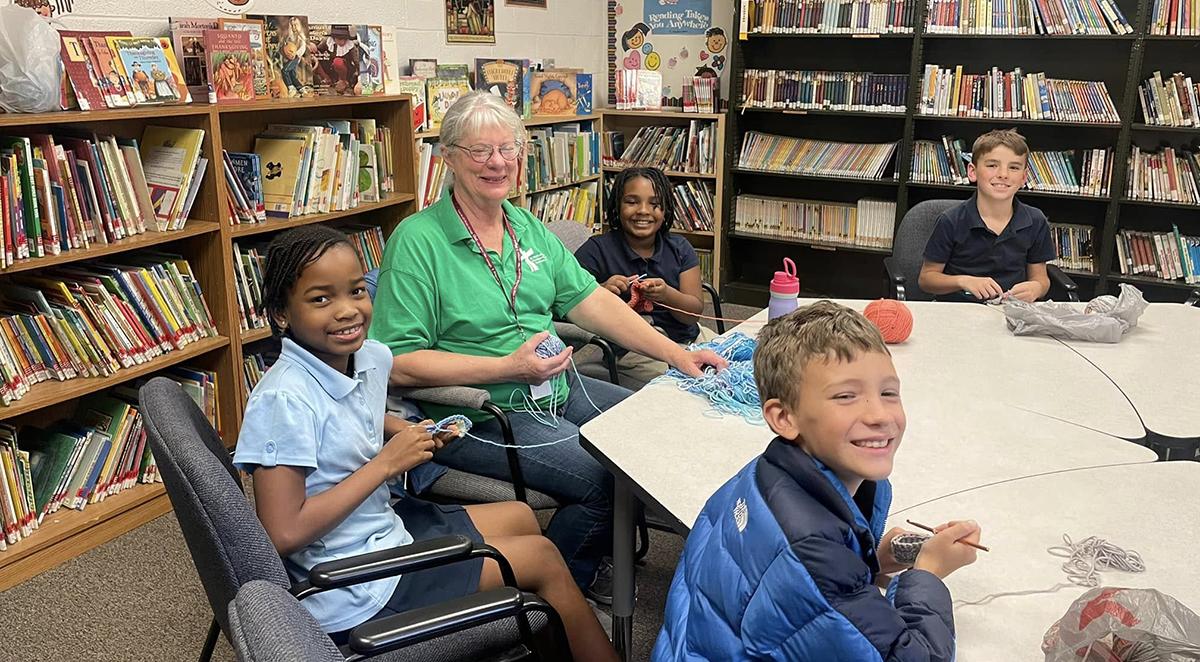
Clubs give students another way to find their place. Current offerings include Running Club, Girls' Volleyball Club, Drama Club, Coding Club, Crochet Club, Art Club, and Floor Hockey Fridays. For competitive athletics, we partner with St. Mary in Royal Oak for after-school sports.
How Faith Integrates Into Academics
Our mission is short and it drives the academic program: Equip, Support, Serve, Witness Where God Calls Us. That framing shapes how a christian school curriculum handles individual subjects.
Here is how integration works across the areas we teach:
- Religion: Worship, Bible study, salvation history, catechism, and memory work give students a structured foundation rather than scattered devotional moments.
- Language arts: Reading, phonics, spelling, handwriting, creative writing, and literature are taught alongside discussions of character, motive, and consequence in the texts students read.
- Science: Instructional materials emphasize hands-on learning and experimentation. Students in kindergarten through fourth grade receive specific instruction in using devices such as Chromebooks, and students in fifth through eighth grade use Chromebooks as research and document production tools.
- Social studies: Geography, history, current events, and Michigan history invite conversations about justice, service, and citizenship.
- Mathematics: Numbers, geometry, measurement, the metric system, and algebra are taught with an emphasis on persistence and honest work.
- Fine arts and physical education: Music, art, choir, drama, band, team sports, and fitness give students room to develop God-given talents and learn to work with others.
For younger children, our preschool program approaches this developmentally. It concentrates on the whole child across social, emotional, physical, language, cognitive, and spiritual growth, using a child-centered, play-based curriculum. Staff-to-child ratios are 1:8 for three-year-olds and 1:10 for four-year-olds.
How Christian Schools Welcome Families From Various Faith Backgrounds
This is often the question families hesitate to ask out loud: will we feel like outsiders?
St. Paul Lutheran School has provided education in downtown Royal Oak for over 100 years to church families and to families who are not church members. The school began in 1916 with eleven students, and serving families beyond the congregation has been part of the picture for generations.
What that means practically is that faith instruction is open and clear rather than assumed. Teachers explain rather than presume prior knowledge, because in any given class some students have grown up in church and some have not. Families who are exploring faith for the first time and families who have been rooted in it for decades sit side by side at the same school events.
The most reliable way to gauge fit is to visit. Walk the halls, sit in on a classroom, and ask the questions that matter to your family. You can learn more about our school on our about page or reach out through our contact page to schedule a tour. For more, read our blog about how biblical principles build great leaders.
What Outcomes Parents Can Expect
No school should promise a particular outcome for a particular child. What we can describe is what families in a character development school setting most often report noticing.
- Academic footing. Small classes mean students receive the help and encouragement they need to reach their potential, and gaps get caught early.
- Character habits that carry. Motivation, self-discipline, and respect for others are taught deliberately and reinforced consistently.
- Comfort speaking about faith. Students who discuss Scripture regularly tend to carry that vocabulary confidently into adolescence.
- A sense of belonging. In a school this size, students are known. That matters most during the middle school years.
- A clear transition path. Lutheran High Northwest is roughly a twenty-five-minute drive from St. Paul. St. Paul church member families are eligible to have a portion of their child's high school tuition paid by the congregation.
Our K-8 program page covers the academic structure in more detail.
Practical Questions to Work Through as a Family
Before you tour any school, it helps to know what you are evaluating. Consider these:
- What do we want our child's daily environment to feel like?
- How important is it that school and home reinforce the same values?
- What role do we want faith-based learning to play in academics specifically?
- What can we realistically budget, and what aid might be available?
- Which activities matter most to our child right now?
Affording a Christian Education
Cost is a legitimate factor, and it is worth asking about early rather than ruling a school out based on assumptions.
Financial aid is available to St. Paul families. The application process takes place in mid-spring, with allocations given to families in late May or early June. Tuition discounts are offered for families with more than one child enrolled, and families can choose from several different payment schedules. Our tuition and fees page has current information.
Frequently Asked Questions
Do we have to be Lutheran to enroll?
No. St. Paul has served both church families and non-member families for more than a century. Contact the school office at 248-546-6555 with any specific questions about your family's situation.
How much of the day is religious instruction?
Religion is one curriculum area among seven, alongside language arts, social studies, science, mathematics, fine arts, and physical education. Worship and Bible study are part of that instruction, and faith themes surface naturally in other subjects.
Will my child fall behind academically?
The curriculum and course of study at St. Paul meet State of Michigan requirements across all subject areas. New students complete placement testing during admission so teachers understand where each child stands from day one.
What does the admissions process involve?
There are three steps: schedule a meeting by calling the school office, submit a new student application along with placement testing and the last two report cards, then finalize registration with enrollment forms and registration fees.
Is before and after school care available?
Yes. Extended care begins at 7:00 AM and after-school care runs until 6:00 PM.
Deciding What Fits Your Family
The benefits of christian education are real, but they are not universal, and no article can tell you whether a particular school suits your particular child. What a guide like this can do is remove the guesswork about what you would be walking into.
If a school where academics, character, and faith are handled as one project sounds like what you are looking for, come see it in person. Call us at 248-546-6555, request more information, or reach out to schedule a tour. We would be glad to show you around and answer whatever you want to ask.