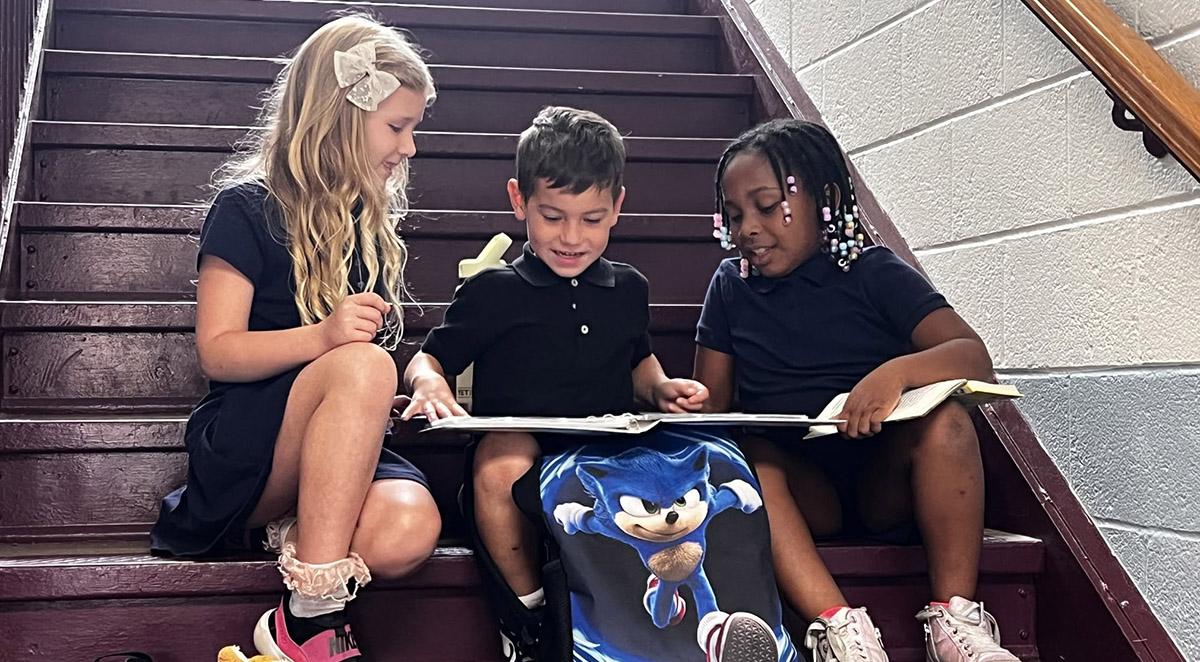
At St. Paul Lutheran School in Royal Oak, we believe that safety begins with relationships. Locks, drills, and policies matter, but so does a close-knit community where adults notice when something is wrong. In this guide, we will walk through how private schools approach safety, what national research shows, and the questions you should ask when evaluating school safety at a Christian school or any other school you are considering.
Quick Summary
- School safety includes physical security, emotional well-being, and protection from bullying.
- Private schools often benefit from smaller campuses, controlled access, lower student-to-staff ratios, and strong community accountability.
- National survey data shows private school students report lower rates of several safety concerns, though every school should be evaluated on its own merits.
- Research from the CDC links a sense of belonging at school with fewer risky behaviors and better outcomes.
- St. Paul Lutheran School offers small combined classes, trained staff, regular emergency drills, and a Christ-centered culture of respect.
- Parents should ask specific questions about visitor policies, emergency procedures, supervision, and bullying prevention before choosing a school.
Why School Safety Matters More Than Ever
Safety is about more than keeping intruders out. A safe school environment protects children physically, emotionally, and spiritually. It gives students the security they need to raise their hands, take academic risks, and build healthy friendships.
When children feel unsafe, learning suffers. Anxiety, fear of bullying, or a sense of being invisible in a crowded hallway can affect grades, attendance, and a child's overall happiness. That is why thoughtful parents look beyond marketing messages and ask how a school handles safety every single day.
How Private Schools Approach Student Safety
Private schools vary widely, but many share structural features that support student safety. Understanding these features can help you compare schools with a clearer lens.
Smaller Campuses Mean Fewer Blind Spots
A smaller building naturally has fewer entrances, fewer hallways, and fewer places where students go unsupervised. Staff members can see more of the campus at a glance, and unfamiliar faces stand out quickly. This is one of the most practical smaller school safety benefits, and it often goes overlooked in larger district conversations.
Controlled Access and Visitor Policies
Most schools today control who enters the building and when. Common school security measures include a single main entrance, sign-in procedures at the office, and clear expectations for visitors during the school day. When you tour a school, pay attention to how you are greeted and whether staff ask who you are and why you are there.
Lower Student-to-Staff Ratios and a Supervised Environment
Fewer students per adult means closer supervision in classrooms, at recess, and during transitions. In a supervised environment, teachers are more likely to notice a child who seems withdrawn, a conflict brewing between classmates, or a student who is not where they should be. Supervision is one of the simplest and most effective safety tools a school has.
Community Accountability and Shared Values
In a private Christian school, families, teachers, and church members often share common values about how children should treat one another. That shared foundation creates accountability. When parents know each other and teachers know every family, problems tend to surface sooner and get addressed together.
What Research Says: Is Private School Safer?
National data offers helpful context, though it is important to read it carefully. The National Center for Education Statistics (NCES) analyzed surveys of students ages 12 to 18 through the School Crime Supplement to the National Crime Victimization Survey. Here is what the data showed:
- Public school students were more likely than private school students to report knowing of a gang presence at school (9 vs. 2 percent), seeing hate-related graffiti (25 vs. 6 percent), and being called hate-related words (7 vs. 4 percent).
- The pattern of higher reported gang presence among public school students held in every survey year since 2001.
- About 21 percent of public school students reported being bullied at school, compared with 16 percent of private school students, although NCES noted this gap was not statistically measurable.
These numbers suggest that private school students, on average, report fewer serious safety concerns. However, NCES also notes that differences may exist among specific types of public and private schools, which means averages cannot tell you everything about an individual campus. The best approach is to use research as a starting point and then evaluate each school directly.
Bullying Prevention Through Relationships
Bullying prevention works best when adults are close enough to see what is happening. In a small school, teachers often know not only each student but also their siblings, parents, and friendships. That knowledge makes it easier to spot changes in behavior and step in early.
Here are a few ways smaller, relationship-driven schools support bullying prevention:
- Early detection: Teachers notice subtle shifts, such as a child eating lunch alone or suddenly avoiding recess.
- Consistent expectations: Clear, shared standards for kindness and respect are easier to reinforce in a close community.
- Family partnership: Parents and teachers communicate frequently, so concerns do not go unnoticed for weeks.
- Mixed-age mentoring: Combined classes and schoolwide activities give older students chances to model kindness for younger ones.
- Faith-based character formation: In a Christian school, lessons on forgiveness, grace, and loving one's neighbor give students a framework for how to treat others.
How St. Paul Lutheran School Approaches Safety
St. Paul Lutheran School has served families in downtown Royal Oak for over 100 years. Our size, our staff, and our faith-centered community all work together to create a safe place for children to learn and grow.
A Small Campus Where Every Student Is Known
St. Paul is intentionally small. After kindergarten, our classes are combined, and each combined class typically has about 10 to 12 students. In our preschool, we maintain a staff-to-child ratio of 1:8 for 3-year-olds and 1:10 for 4-year-olds.
This size means our teachers and staff can know every student by name, along with their families. A child who is struggling, upset, or out of place does not slip through the cracks. You can learn more about the people who care for our students on our faculty and staff page.
Staff Training and Regular Emergency Drills
Preparation matters. Over the past two years, our entire school staff has completed two specific training sessions on best practices for student and staff safety in a variety of situations. This training helps our team respond calmly and consistently if an emergency occurs.
St. Paul also conducts fire drills and safety drills throughout the school year. Drill information is shared with families through our Current Families resources, so parents stay informed about how the school prepares.
Clear Communication With Families
Student safety in a private school depends on strong partnership with parents. St. Paul keeps families connected through our weekly newsletter, The Viking, and a set of forms that help us care for each child well, including:
- An emergency card with contact information
- Health appraisal and medication forms for over-the-counter and prescription medications
- A concussion form
- A walking permission slip
- The Student/Parent Handbook, which outlines school policies and expectations
These tools ensure that our staff has the information needed to respond quickly and appropriately when a child needs help.
A Christ-Centered Culture of Respect
Our mission is to equip children for a life of service with a foundation of academic, physical, spiritual, and social maturity centered around Jesus Christ. Our teachers and staff work to create a nurturing environment that promotes motivation, self-discipline, and respect for others. That culture shapes how students speak to one another, resolve conflicts, and care for classmates. Families can explore our K-8 program to see how faith and learning come together each day.
Read more in our post on the importance of prayer in education.
You can learn more about our school on our about page or reach out through our contact page to schedule a tour. For more, read our blog about how biblical principles build great leaders
Frequently Asked Questions
Is private school safer than public school?
National survey data from NCES shows that private school students report lower rates of gang presence, hate-related graffiti, and hate-related name-calling than public school students. Still, safety varies from school to school, so it is important to visit and ask detailed questions about each campus.
What school security measures should a Christian school have?
Look for controlled building access, clear visitor policies, trained staff, regular emergency drills, and strong communication with families. Just as important is a culture of respect and close supervision, where adults know students well enough to notice concerns early.
How does class size affect student safety?
Smaller classes allow teachers to supervise more closely and build stronger relationships with each child. Research on school connectedness shows that students who feel cared for by adults at school tend to avoid risky behaviors and experience less emotional distress.
How does St. Paul Lutheran School prepare for emergencies?
Our entire staff has completed two safety training sessions over the past two years, and we hold fire drills and safety drills throughout the school year. We also maintain emergency contact and health information for every student.
Can I visit St. Paul to see the campus for myself?
Yes. We welcome families to tour our school, meet our staff, and ask any questions about safety and daily routines. Contact us to schedule a visit.
Finding a Safe School Environment for Your Child
Safety should never be an afterthought. The right school combines practical security measures with something just as powerful: a community where every child is seen, supported, and loved.
At St. Paul Lutheran School, our small campus, trained staff, and Christ-centered culture work together to give students a secure place to grow in mind, body, and spirit. We invite you to see the difference for yourself. Reach out to our team today to schedule a tour and learn how St. Paul can partner with your family.