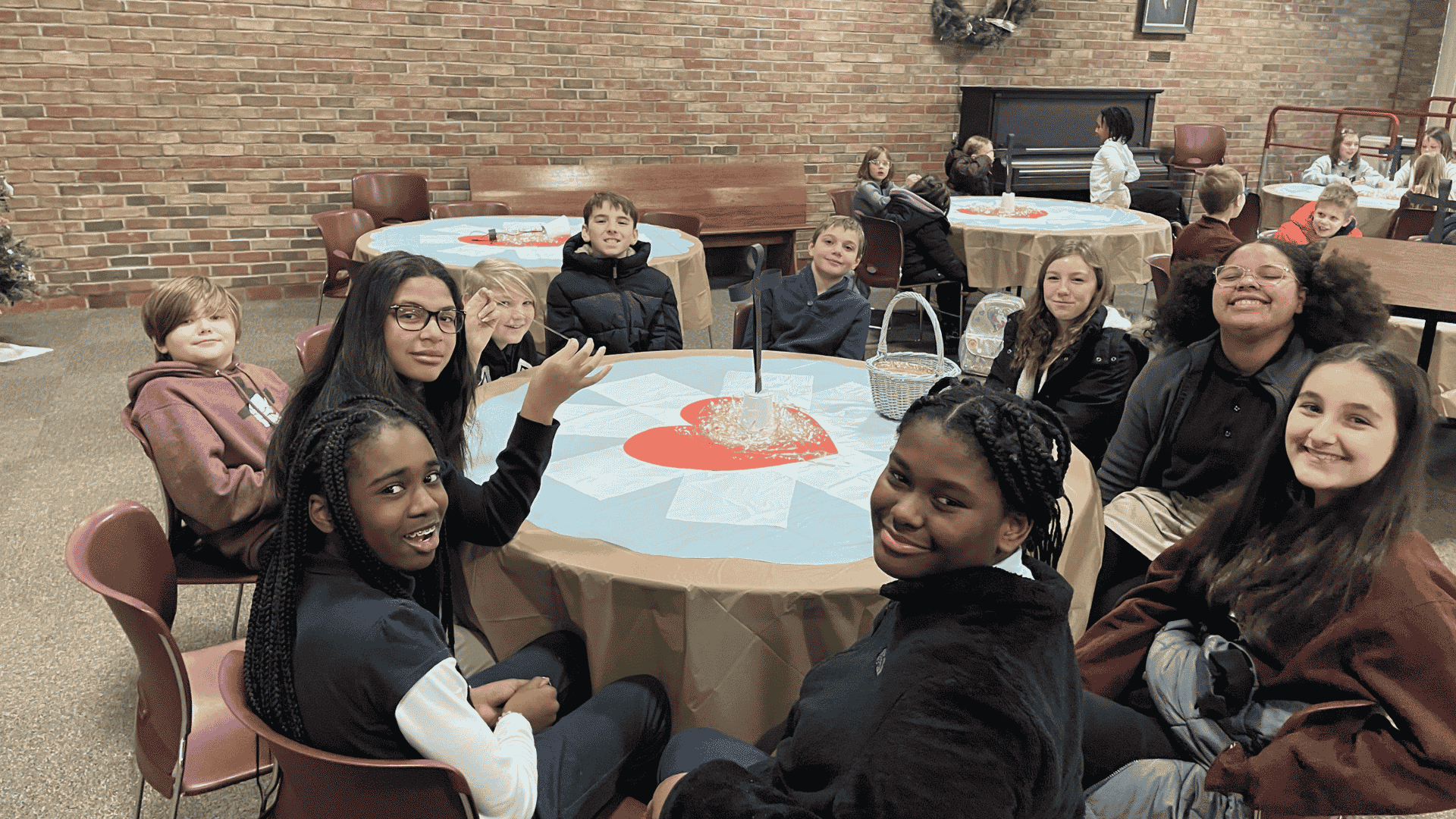
The case for K-8 education is not just anecdotal. Educational research consistently highlights the K-8 school benefits that come from allowing children to learn and grow within a single school community from kindergarten through eighth grade. When students remain in one environment through these formative years, they avoid the disruptive transition that often occurs when moving to a separate middle school during the vulnerable preteen years.
Students in K-8 schools tend to experience fewer behavioral problems, maintain higher levels of academic achievement, and demonstrate greater school readiness when they transition to high school.
Academic Consistency Builds a Stronger Foundation
One of the clearest K-8 school benefits is academic consistency. In a K-8 setting, teachers and administrators have years to understand each student's strengths, learning style, and areas for growth. Instruction builds on itself year after year without the disruptions that can occur when a child moves to a new school with new teachers and a different curriculum philosophy.
At St. Paul Lutheran School in Royal Oak our curriculum meets the requirements of the State of Michigan while going further to integrate quality education across all subject areas. Our students study a comprehensive course of work that spans the following areas:
- Religion, including worship, Bible study, salvation history, catechism, and memory work
- Language arts, covering reading, phonics, English, spelling, handwriting, practical and creative writing, and literature
- Social studies, encompassing geography, history, current events, and Michigan history
- Science, including general science, health, family life, and computer education
- Mathematics, incorporating use of numbers, geometry, measurement, metric system, and algebra
- Fine arts, with music, art, choirs, drama, and band
- Physical education, featuring individual and team sports, skills testing, physical fitness, and recreation
Social Maturity Through a Stable Community
The social and emotional development that occurs between kindergarten and eighth grade is enormous. Children go from learning how to share crayons to navigating complex friendships, developing leadership skills, and building the emotional resilience they will need in high school.
In a K-8 environment, this growth happens within a stable community. Students are not uprooted during the critical middle school years, a period when adolescents are already dealing with significant physical, emotional, and social changes. Instead, they have the security of familiar relationships with teachers, staff, and classmates.
Read our blog about how biblical principles build great leaders.
How K-8 Prepares Students for High School
The transition from eighth grade to ninth grade is one of the most significant academic transitions a student will face. It involves new academic expectations, new social dynamics, a larger school environment, and increased independence. How K-8 prepares students for high school comes down to the habits, skills, and confidence that are cultivated across those foundational years.
Study Habits and Self-Discipline That Stick
High school success depends heavily on a student's ability to manage their own learning. Keeping track of assignments, studying independently, managing time, and advocating for themselves when they need help are all skills that develop gradually over years of practice and guidance.
In a K-8 school, students develop these study habits within a consistent framework. Teachers who know their students well can introduce increasing levels of responsibility at the right pace. By the time students reach seventh and eighth grade, they have years of experience with self-discipline education that prepares them for high school demands.
The following study habits are cultivated across the K-8 experience and prove essential in high school:
- Time management skills, including the ability to balance multiple assignments and long-term projects
- Note-taking and active listening during classroom instruction
- Independent reading and research skills that support deeper learning
- Self-advocacy, or knowing when and how to ask teachers for help
- Organizational skills for tracking assignments, deadlines, and materials
- Test preparation strategies that go beyond last-minute cramming
- Collaborative skills developed through group projects and peer mentoring
Read our blog about the value of private school for Michigan families.
Fewer Disruptive Transitions Mean Greater Confidence
One of the strongest arguments in the K-8 vs middle school comparison is the issue of academic transitions. In a traditional model, students leave elementary school around fifth or sixth grade and enter a middle school where they must adjust to a new building, new teachers, new peers, and a different school culture. This transition can lead to drops in academic performance and increases in anxiety at a particularly vulnerable developmental stage.
K-8 students avoid this disruption entirely. When they transition to high school, it is the first major school change they have experienced, and they approach it with the confidence that comes from years of stability. Research supports this perspective, showing that K-8 students tend to make smoother transitions to high school compared to students who experienced the elementary-to-middle-school switch.
Building the Bridge from K-8 to High School Success
The Role of the 8th Grade Experience
The eighth grade year is a critical bridge between the K-8 experience and the demands of high school. It is the year when students consolidate everything they have learned, push their academic skills to new levels, and begin thinking seriously about their next steps.
At St. Paul Lutheran School, the 8th grade experience is designed to be exactly this kind of bridge. Students engage with challenging coursework across all subject areas while developing the maturity and school readiness they need for their next academic environment. Small class sizes and close teacher-student relationships ensure that this preparation is personalized.
Supporting Families Through the High School Selection Process
For families at a K-8 school, choosing the right high school is a major decision. It involves evaluating academic programs, school culture, extracurricular offerings, and the overall fit for each student.
St. Paul Royal Oak is committed to supporting families through this transition. Having spent years building relationships with families, our teachers and staff are uniquely positioned to help parents think through what kind of high school environment will best serve each student's needs, interests, and goals. This private school high school preparation includes helping families understand what high schools look for in incoming freshmen, ensuring students have the records and recommendations they need, and providing holistic support that only comes from a school community that has watched each child grow over many years.
Frequently Asked Questions About St. Paul Lutheran School
What grades does St. Paul Lutheran School serve?
St. Paul Lutheran School offers programs from preschool through eighth grade. The preschool serves children ages three and four, and the K-8 program provides a continuous educational pathway all within one school community. Students who start in preschool can remain at St. Paul through their middle school years, building lasting relationships with teachers and classmates along the way.
Does my family need to be Lutheran or a church member to enroll?
No. St. Paul has been providing quality education in downtown Royal Oak for over 100 years to both church families and non-members. Families of all backgrounds are welcome to apply and to experience the school's Lutheran educational tradition. You do not need to be a member of St. Paul Lutheran Church to enroll your child.
What is the school's mission?
St. Paul Lutheran School equips children for a life of service with a foundation of academic, physical, spiritual, and social maturity centered around Jesus Christ. The school is committed to academic excellence and the development of mind, body, and spirit.
What curriculum does St. Paul follow?
The curriculum and course of study at St. Paul meet the requirements of the State of Michigan. All subjects are taught in a Christian atmosphere where Christian love and joy can become a genuine part of life. The areas of the curriculum include:
- Religion, including worship, Bible study, salvation history, catechism, and memory work
- Language Arts, including reading, phonics, English, spelling, handwriting, and literature
- Social Studies, including geography, history, current events, and Michigan history
- Science, including general science, health, and computer education
- Mathematics, including geometry, measurement, metric system, and algebra
- Fine Arts, including music, art, choirs, drama, and band
- Physical Education, including individual and team sports, skills, and fitness
What is the student-to-teacher ratio at the preschool?
St. Paul maintains intentionally small preschool class sizes to ensure individualized attention. The staff-to-child ratio for three-year-olds is 1 teacher to every 8 children (1:8), and for four-year-olds it is 1 teacher to every 10 children (1:10). The preschool uses a child-centered, play-based curriculum with many hands-on, memorable learning experiences.
What is the preschool's educational approach?
St. Paul Lutheran Preschool partners with parents in educating children by teaching the Christian faith in accordance with the Holy Scriptures and the Confessions of the Lutheran Church, and by teaching secular subjects following the Early Childhood Standards of the State of Michigan. The program is designed to concentrate on the whole child, encouraging growth in six developmental areas: social, emotional, physical, language, cognitive, and spiritual.
Why St. Paul Royal Oak for Your K-8 Journey
Choosing the right K-8 school is one of the most important decisions a family can make. At St. Paul Lutheran School in Royal Oak, we offer an environment where students thrive academically, grow spiritually, and develop the character that will carry them through high school and beyond.
Here is what families can expect when they choose St. Paul:
- Over 100 years of quality education in downtown Royal Oak serving church families and non-members alike
- Small class sizes that ensure every student receives individualized attention and encouragement
- A comprehensive K-8 curriculum that meets State of Michigan requirements and exceeds expectations
- An exceptional music program, including general music, beginning and advanced band, handbell choir, select choir, and a school-wide choir
- Athletic opportunities through a partnership with St. Mary in Royal Oak, along with after-school clubs such as Cross Country Club
- Extended care available from 7:00 AM through 6:00 PM for families who need before and after school options
- A Christ-centered environment where academic excellence and spiritual growth go hand in hand
Our K-8 model provides the academic consistency, social stability, and personalized preparation that students need to enter high school with confidence. We prepare them for a lifetime of learning, growth, and service.
If you are exploring private Christian education in the Royal Oak area, St. Paul Lutheran School welcomes families to learn more about their programs, tuition, and financial aid options. With over 100 years of serving families in Oakland County, St. Paul is committed to making quality, faith-centered education accessible. Reach out to start a conversation about how a St. Paul education can work for your family.